


06 nov EXCAVATION OF THE FIRST 10 NEW PONDS FOR MOOR FROGS COMPLETED – WORK CONTINUES
At the beginning of autumn, after obtaining all the necessary permits and approvals, we began excavating ponds for the moor frog (Rana arvalis) in the Ljubljansko barje. The ponds were carefully designed to meet the ecological needs of this rare amphibian: they include large shallow zones that warm up quickly in spring, as well as slightly deeper parts that retain water during dry periods, ensuring successful development of tadpoles.
Our efforts aim to increase the availability of suitable breeding habitats and to improve the long-term conservation status of the moor frog population in the area.
The excavation of the first ten new ponds has now been completed, while work on additional sites will continue in the coming weeks. In the core distribution area of the moor frog, we plan to create three more ponds and restore three existing ones, providing the local population with additional and improved breeding habitats.
Creation of additional ponds just outside the species’ core area will help expand the moor frog’s range.
By establishing these new ponds, we also aim to strengthen local amphibian populations in general – not only the moor frog, but also other species sharing the same environment, such as the Italian crested newt, brown frogs, European tree frog, European pond turtle, and numerous aquatic invertebrates.
Protecting Cultural Heritage
At every construction site, the Ljubljansko Barje Landscape Park team works alongside an archaeologist. The entire wetland is protected as an archaeological site of national importance, due to the frequent discoveries from all archaeological periods – from the Paleolithic to the Roman era. Among the most significant finds are the prehistoric pile-dwelling settlements, which are part of the UNESCO World Heritage List.
Archaeological supervision is also one of the official conditions for obtaining cultural heritage consent. So far, no archaeological remains have been discovered during the excavation works.
The Moor Frog – a Unique Brown Frog
The moor frog is a rare and endangered brown frog species. Adults are generally brown with a pale belly and dark throat spots, but during the breeding season, males turn an intense blue for just a few days – a striking feature that makes them easily recognizable.
Breeding takes place in early spring, when the frogs gather in ponds and remain active even during the day. After spawning, adults move to nearby terrestrial summer habitats, usually close to their breeding sites.
In addition to the loss of suitable habitats, moor frogs are also threatened by disturbances at breeding sites. During the breeding season, the frogs are particularly sensitive, and their reproductive success depends heavily on a calm environment. In recent years, we have installed special warning signs at the most vulnerable locations to discourage visitors from entering key aquatic habitats during this critical period.
Sharing Knowledge and Building on Experience
With the new pond excavations, we are continuing the work and applying the knowledge and experience gained through the LIFE AMPHICON project. Before this latest phase, 50 new aquatic habitats had already been successfully created within the Ljubljansko barje.
Over the years, we have improved our approaches to designing, constructing, and managing amphibian habitats, and we are now applying these lessons to new areas and additional target species. In the coming year, we will closely monitor how amphibians colonize the new ponds and assess their success in establishing stable populations.
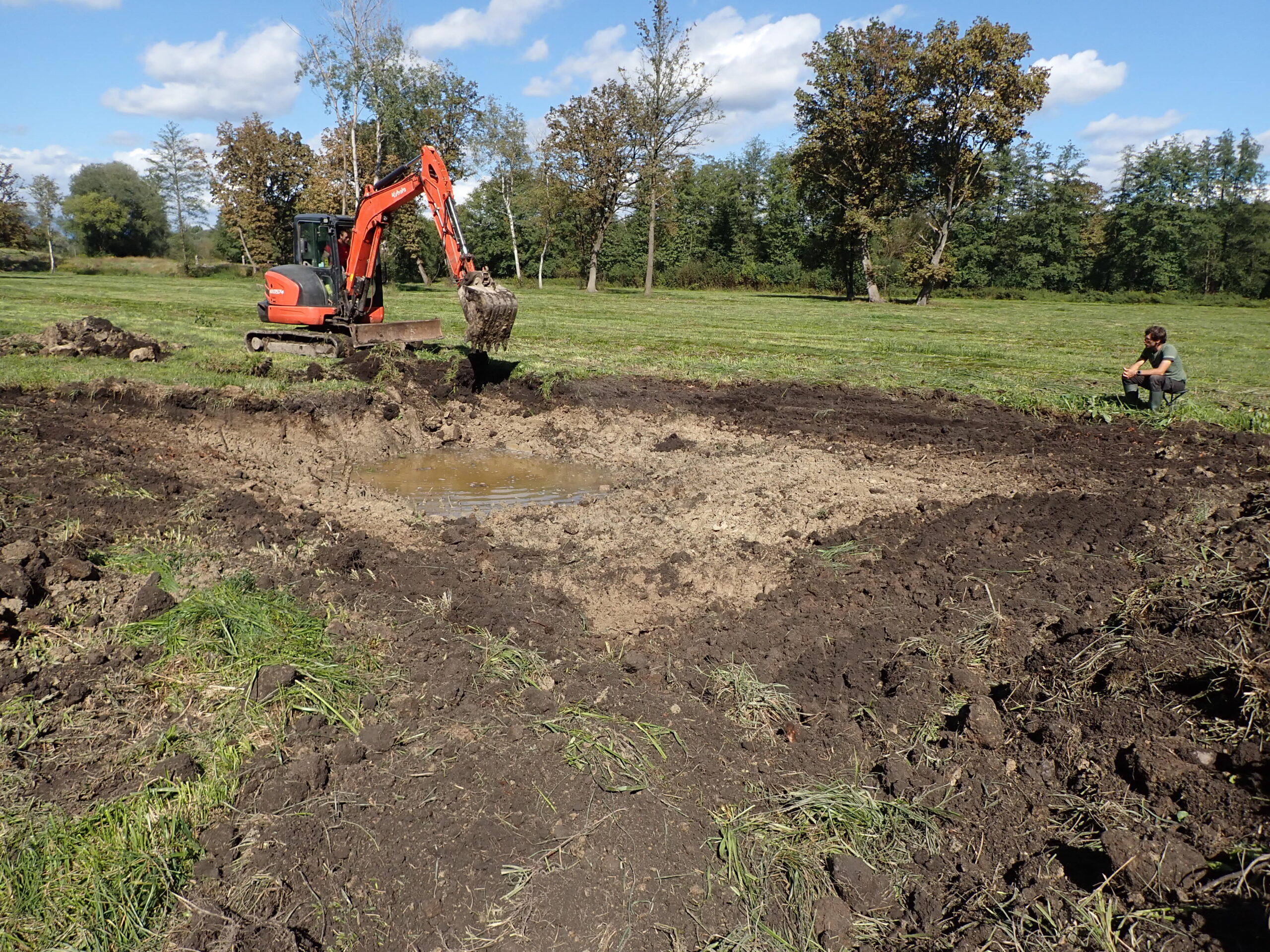
Photo: M. Kržič