


22 okt Workshop on Amphibian Conservation for Foresters
On Thursday, October 1, 2026, we held a workshop titled “Amphibian Conservation in Forest Areas” in Kozjanski Park, organized by the Kozjanski Park Public Service Agency and the Center for Cartography of Fauna and Flora as part of the LIFE project “Conservation of Amphibians and Restoration of Their Habitats” (LIFE AMPHICON). The event took place at the “V sadovnjaku” Interpretation Center in Gradišče near Podsreda and on Bohor.
The workshop, which was designed to transfer best practices in nature conservation to operational forestry, used the example of conservation measures for the yellow-bellied toad (Bombina variegata) on Bohor to discuss the importance and possibilities of integrating measures for amphibian conservation and forest management in the Republic of Slovenia.
In addition to representatives from the Kozjanski Park Public Service Agency and the Center for Cartography of Fauna and Flora, the event was also attended by representatives from the Slovenian Forest Service (Brežice and Celje regional offices), the Slovenian State Forests company, and the Slovenian Nature Conservation Agency (Celje and Novo Mesto regional offices).
At the beginning, as part of a series of two lectures, we first introduced participants to the LIFE AMPHICON project, the importance of amphibians, their species diversity, and their ecology. We identified the threats to amphibians and presented the conservation measures available to protect them. We also emphasized the importance of forests as vital habitats that enable amphibians to develop and live throughout the different seasons, as well as the necessity of connecting aquatic and terrestrial habitats for the survival of amphibians. We presented in detail the measures aimed at improving the conservation status of the mountain newt (B. variegata) in the Bohor project area.
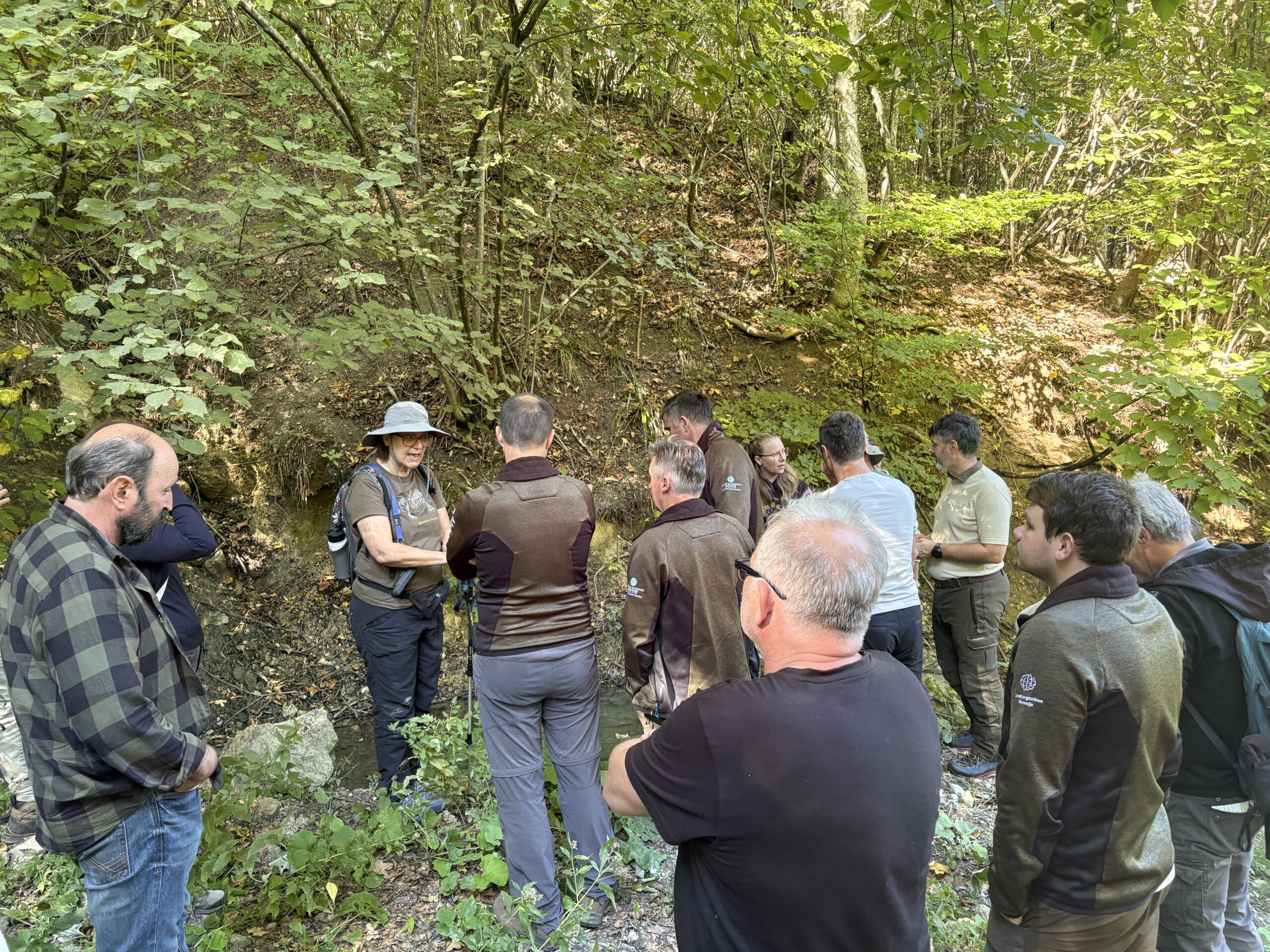
After a snack, we moved on to the fieldwork part of the workshop, where we observed first-hand the measures being taken to conserve the yellow-bellied toad on Bohor. This species is primarily threatened in this area by the small number of breeding sites, which are not adequately connected to one another. As part of the project, we have therefore established 30 new ponds for this species – during the workshop, we visited seven of them.
At the workshop on ‘Amphibian Conservation in Forest Areas’, we exchanged views and experiences regarding the conservation of amphibians in Slovenia’s forests, discussed the challenges involved in preserving existing and establishing new water bodies in forest areas, and considered the possibilities for cooperation between forest owners and contractors in implementing measures, as well as the necessity of collaboration between various stakeholders (district foresters – forest owners – contractors carrying out measures in forests – nature conservationists – species-specific experts – …).
The protection of amphibians in forest areas in Slovenia is currently carried out indirectly through the maintenance of ecological balance and the conservation of biodiversity, as stipulated by the Forest Act. Forest management in Slovenia is also adapted to this, being environmentally friendly, sustainable and multi-purpose. Amphibians are indirectly protected also by measures to maintain and improve the habitats of wild animals, and by the maintenance and creation of water sources and wetlands, as required by the Forest Protection Regulations. In private forests and tree nurseries, incentives are available for the implementation of such measures in the form of co-financing from the Slovenian national budget (Regulations on the Financing and Co-financing of Investments in Forests). The co-financing rate is higher in forests located within Natura 2000 sites.
Measures specifically targeting amphibian species and their habitats in forests located within Natura 2000 sites are set out in the Natura 2000 Site Management Programme (PUN). Forest managers can make use of a range of educational resources, which are freely available online (https://natura2000.gov.si/na-terenu/gozdarji-za-naturo-2000/), to assist them in implementing nature conservation measures in forests – at the workshop, we presented the Handbook on the Maintenance and Construction of Water Sources in Forests.
We would like to thank all participants for attending the workshop and for their active participation.
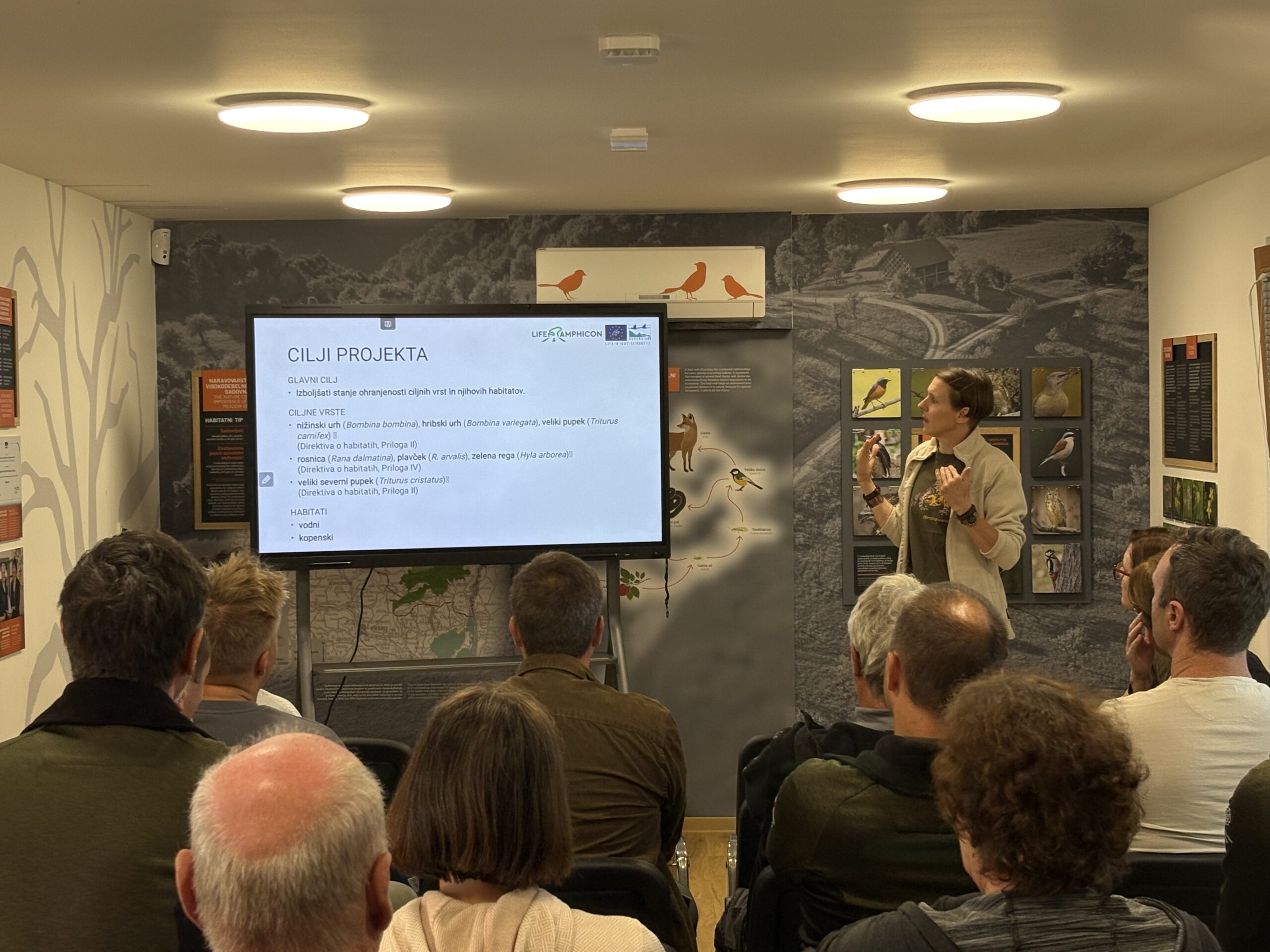
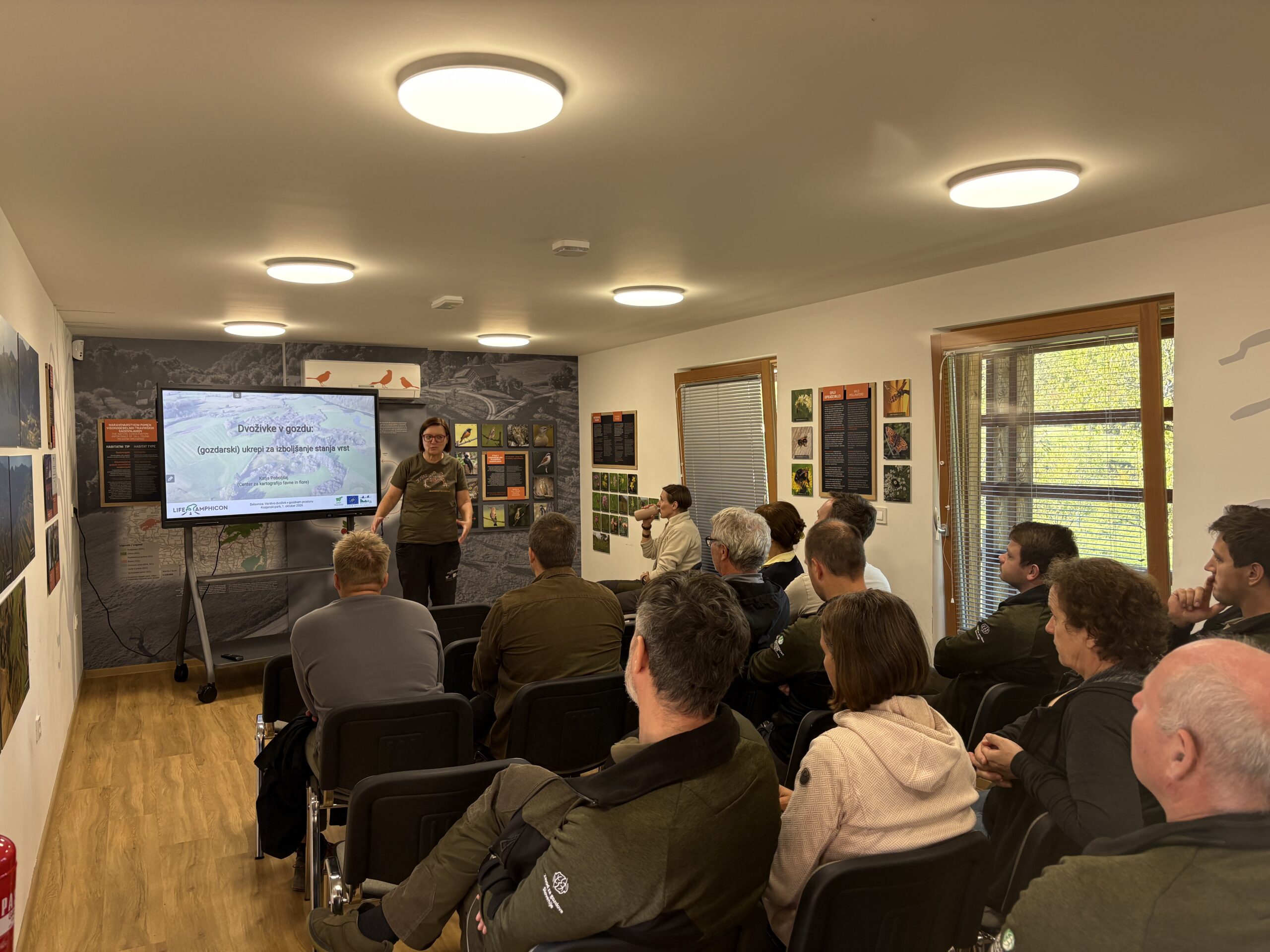
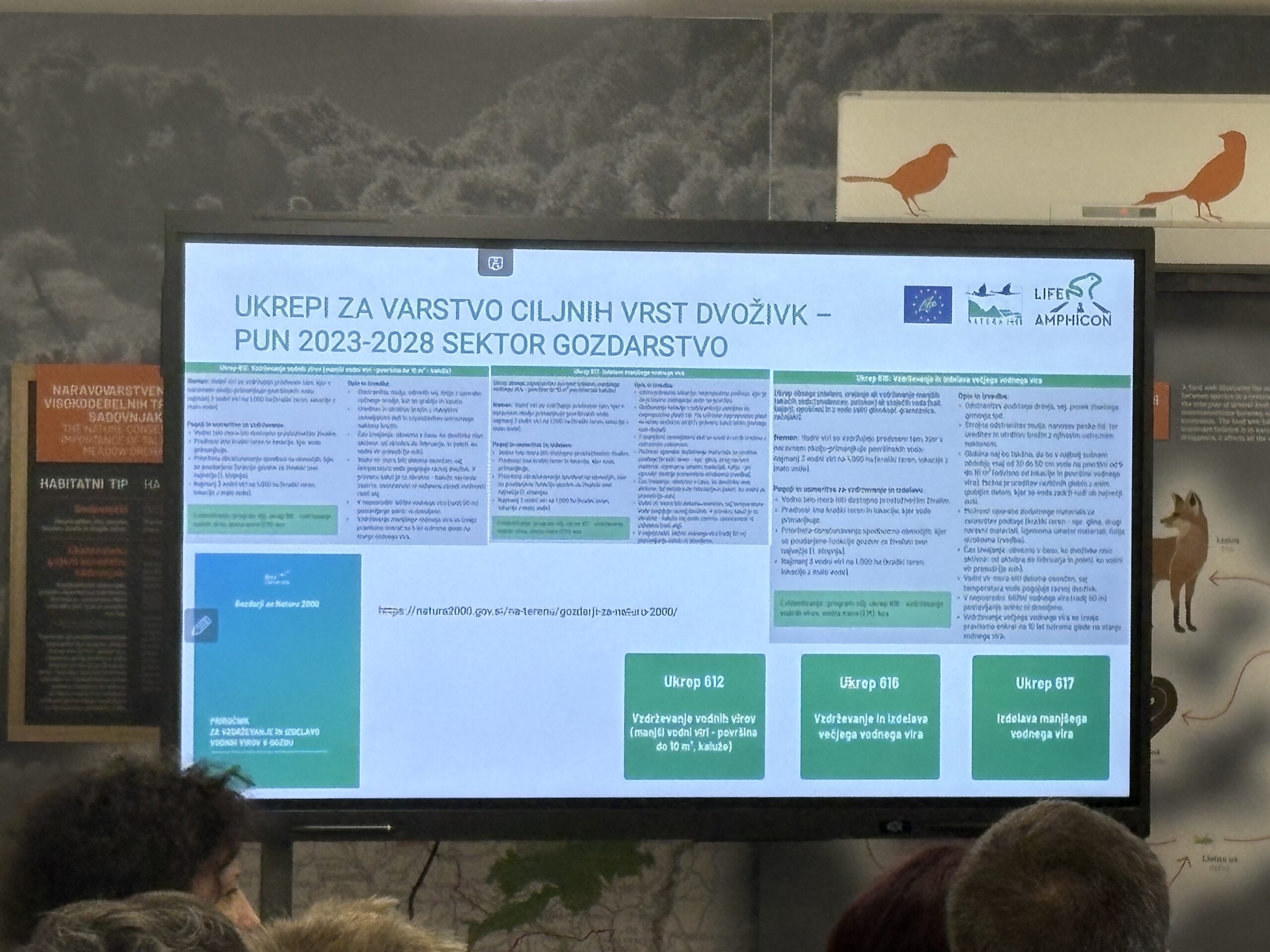
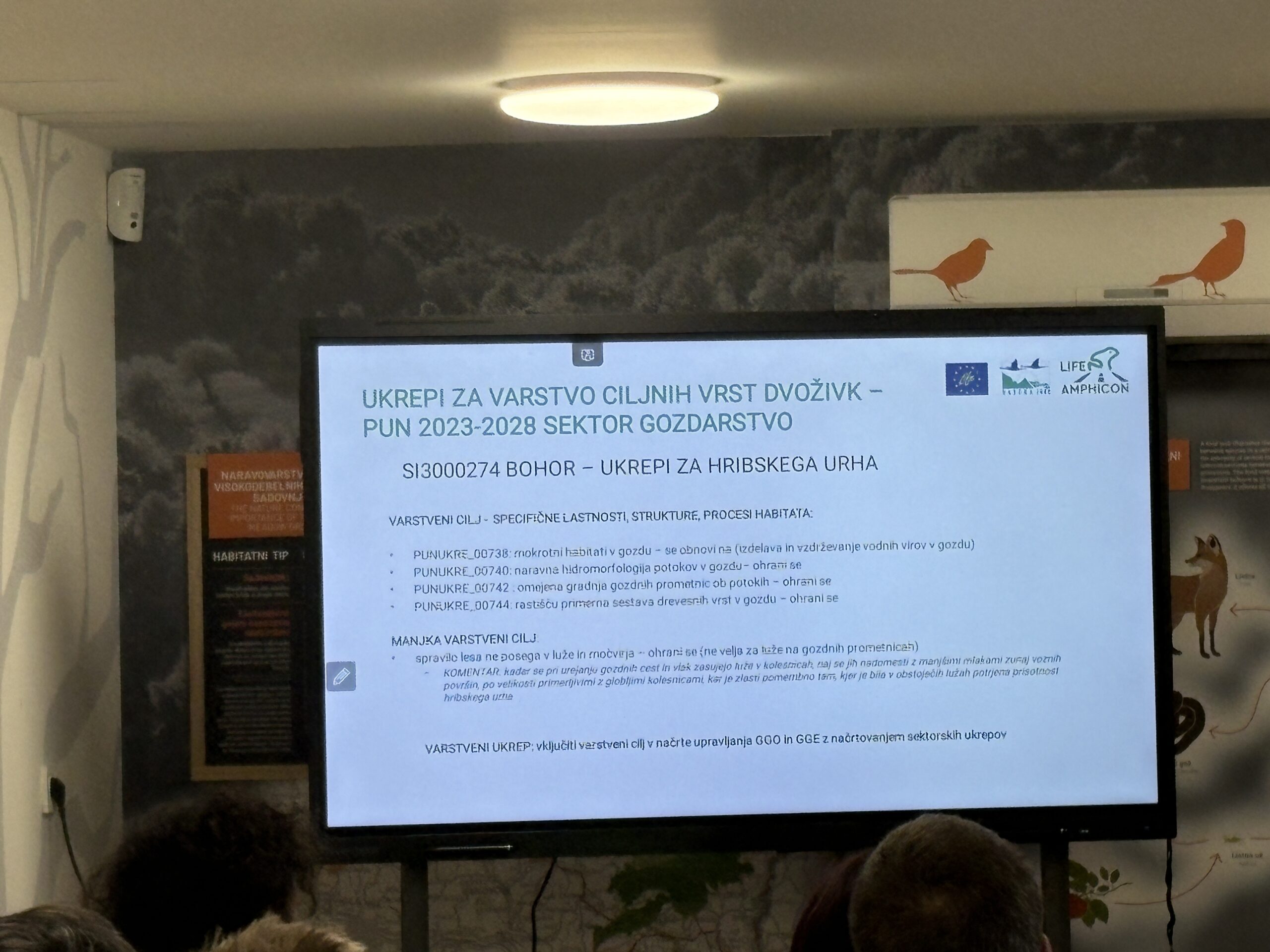
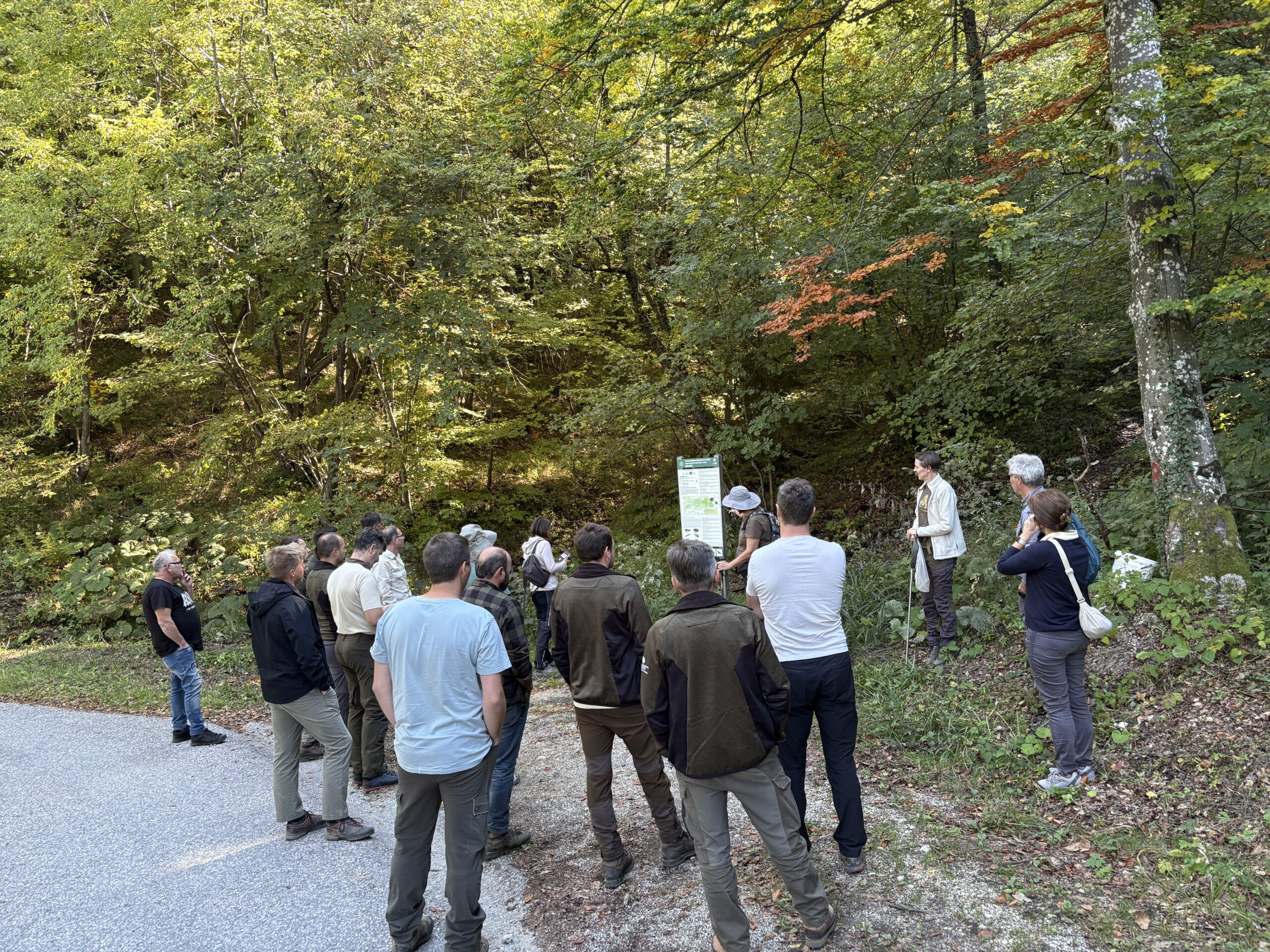
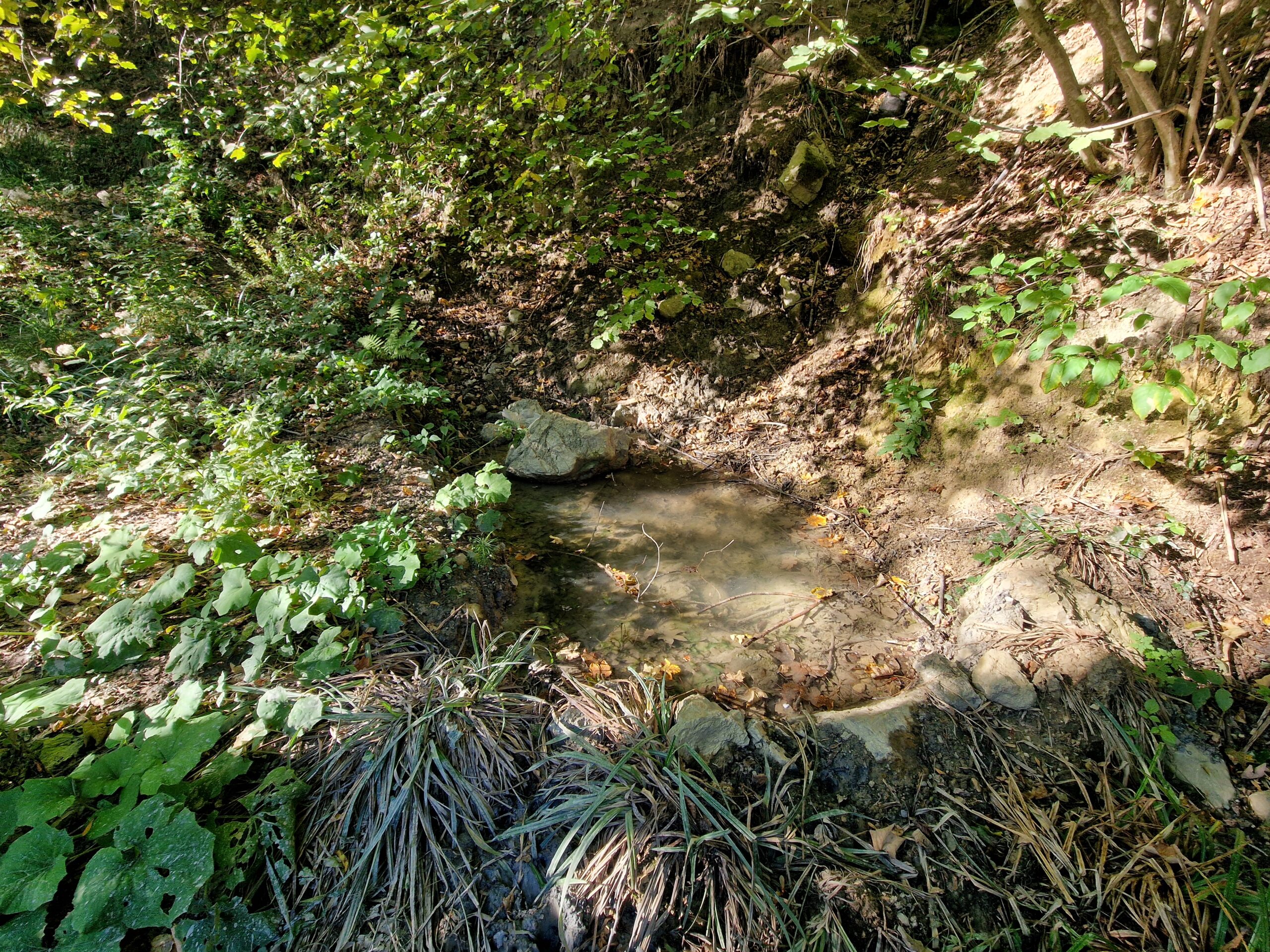
Photo: E. Jevšnik, A. Kavčič